
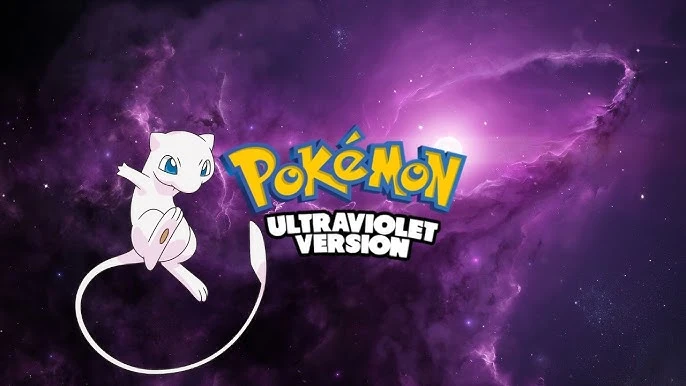
Most Kanto ROM hacks pick one lane: bigger Pokedex, harder battles, or a new story. Pokemon Ultra Violet just tries to let you catch everything. It’s a FireRed hack built around a single idea: one save file, every Gen 1-3 Pokemon, no trading required. That sounds like a lot of ROM hack marketing until you actually look at what LocksmithArmy shipped back in 2013 and finished a year later, at which point it’s less “hype” and more “someone actually finished the checklist.” If you’re looking for a Pokemon Ultra Violet download, the short version is: this isn’t a new region or a difficulty overhaul, it’s still Kanto, just with the Pokedex door left wide open.
Pokemon Ultra Violet — Quick Facts
LocksmithArmy
v1.22 (v1.21 content + save-compatibility fix)
Pokemon FireRed
Game Boy Advance (GBA)
Complete
English

What Is Pokemon Ultra Violet?
Pokemon Ultra Violet is a Pokemon FireRed ROM hack created by LocksmithArmy, first released on PokeCommunity in February 2013 and marked complete in its 1.21 update, with a small 1.22 follow-up that only touched save compatibility. It keeps FireRed’s Kanto map, story, and gyms intact. What it changes is what you can actually catch: instead of the vanilla 151, Ultra Violet folds Generations 1, 2, and 3 into one FireRed cartridge, using version-exclusive swaps, non-trade evolution workarounds, and a new optional island so nothing is locked behind a second cartridge or a link cable.
It’s a completionist’s hack more than a difficulty hack. If you came here after Pokemon Radical Red looking for something tougher, this isn’t that. Ultra Violet is closer in spirit to “what if the original Pokedex just… didn’t stop at Kanto.” If you want a similarly open Pokedex with sterner battles, Pokemon Fire Red Omega gives its Gym Leaders full six-Pokemon teams.
Ultra Violet vs Vanilla FireRed
| Feature | Vanilla FireRed | Pokemon Ultra Violet |
|---|---|---|
| Catchable Pokemon | Gen 1 only (151) | Gen 1-2 in the main game, plus Gen 3 on 4-Points Isle |
| Starter selection | Pick one of three in Oak’s Lab | Pick one of three, or decline and catch your own starter instead |
| Trade evolutions | Requires a second cartridge and a link cable | Reworked so trading isn’t required |
| Sevii Islands | Gen 1 post-game content only | Gen 2 Pokemon added; Ho-Oh, Lugia, and Deoxys obtainable by island ticket, no Nintendo event required |
| Extra areas | None | 4-Points Isle (optional, Gen 3 encounters) |
Main Features
- Every Generation 1 and 2 Pokemon obtainable on a single save file, no second game or trading needed
- Version-exclusive pairs (like Oddish and Bellsprout on Route 24) both made available, so nothing is permanently locked by a version split that no longer exists
- All fossil Pokemon and the classic “needs a friend” fighting-types obtainable without trading
- Trade-evolution lines reworked to evolve without a link cable
- Umbreon and Espeon obtainable without relying on the GBA’s internal clock
- Mew placed at an early-game location instead of behind a Nintendo event
- Ho-Oh, Lugia, and Deoxys reachable through the Sevii Islands via an in-game ticket, again with no event requirement
- Raikou, Entei, and Suicune obtainable, tied to which starter you pick
- 4-Points Isle, an optional new area holding the Generation 3 encounters
- An option to catch your own starter instead of taking one from Oak’s three Poke Balls
Pokemon Availability & Pokedex
Here’s the part worth being precise about, because “catch everything” gets thrown around loosely on ROM hack sites. What’s actually documented: every Generation 1 and Generation 2 Pokemon is catchable in the core game and Sevii Islands on one save, with version-exclusive Pokemon and trade evolutions both handled so a single cartridge covers them. Generation 3 Pokemon are catchable separately through the optional 4-Points Isle area added in version 1.20. Community sources cite a combined total in the high 300s once all three generations are counted, though we’re not stamping an exact figure as verified since it wasn’t stated in the creator’s own documentation we could confirm.
Trading is not required to complete the Pokedex. Trade-evolution lines were reworked with an alternate method in place of the link-cable trigger, though the exact in-game mechanic used for each line isn’t something we could confirm line-by-line from primary sources, so treat that detail as community-documented rather than independently verified until a dedicated Pokedex article covers it.
Starter System
Starter choice happens the same way it always has in FireRed: Bulbasaur, Charmander, or Squirtle from Professor Oak’s lab. Ultra Violet adds one option on top of that. From version 1.10 onward, if you talk to Oak without taking one of his three Poke Balls, he gives you the option to catch your own starter instead. Community documentation describes this as a Safari Ball-based catching sequence, though we haven’t independently confirmed that specific detail against the creator’s own notes, so take the “how” with a grain of salt even though the “that it exists” part is solid.
New Areas & Events
The map is still Kanto, plus the Sevii Islands, plus one new addition: 4-Points Isle, added in version 1.20 as an optional destination holding the game’s Generation 3 encounters. Beyond that, the Sevii Islands themselves got Generation 2 Pokemon folded into their encounter tables, and the legendary birds/Deoxys unlock through a store-bought island ticket rather than a Mystery Gift event. There’s no second region and no rewritten main story here — the additions sit on top of FireRed’s existing structure rather than replacing it. If you want a hack that does add a second region, Pokemon Clover goes in that direction.
Legendary & Special Pokemon
The headline legendaries are all obtainable without a Nintendo event ticket. Ho-Oh, Lugia, and Deoxys are reachable via the Sevii Islands once you buy the relevant island ticket in-game. Raikou, Entei, and Suicune are obtainable too, with which one you get tied to your starter choice, according to the creator’s own notes. Mew is placed at an early-game location rather than behind an event, and shows up on the title screen as a nod to that. We’re keeping this section high-level on purpose — exact routes, level requirements, and step-by-step catch orders for each legendary belong in a dedicated Pokemon Ultra Violet Legendary Locations guide down the line, not crammed into an overview page.
Version Information
| Version | What changed |
|---|---|
| 1.0 / Beta | Initial release |
| 1.10 | Added the option to catch your own starter instead of picking one from Oak |
| 1.20 | Added 4-Points Isle and Generation 3 encounters |
| 1.21 | Declared the final content update; every Pokemon verified obtainable; official Player’s Guide released for this build |
| 1.22 | Save-compatibility fix only, letting players without in-game-save hardware skip the post-Elite-Four reset |
How to Patch Pokemon Ultra Violet
Patch: Pokemon Ultra Violet v1.22 | Format: IPS | Base: Pokemon FireRed (USA) 1.0
Once you have the patch file in hand, applying it doesn’t require installing anything:

- Get a clean Pokemon FireRed ROM. For the best compatibility, use the FireRed (USA) 1.0 base associated with this release.
- Get the Ultra Violet patch file using the download button above.
- Open the online ROM patcher linked above.
- Select your clean FireRed ROM as the base file.
- Select the Ultra Violet patch file.
- Apply the patch. It runs locally in your browser, so nothing gets uploaded anywhere.
- Save the resulting patched file and load it in your GBA emulator of choice.
You’ll need your own legally-dumped FireRed cartridge to patch onto — this site doesn’t host ROM files, only the patching workflow above.
FAQ
What is Pokemon Ultra Violet? A completed Pokemon FireRed ROM hack by LocksmithArmy that lets you catch Generation 1, 2, and 3 Pokemon on a single save file without trading.
What is the latest version? Version 1.22. It only adds a save-compatibility fix on top of 1.21, which is where the actual content was finalized.
Is Pokemon Ultra Violet complete? Yes. The creator marked 1.21 as the final content update, with every Pokemon double-checked as obtainable.
Which FireRed ROM does Ultra Violet require? FireRed (USA) 1.0 is the base version associated with this release. For the best compatibility, patch onto that revision.
Can you catch all Pokemon in Ultra Violet? All Gen 1-2 Pokemon are catchable on one save, and Gen 3 Pokemon are catchable separately on 4-Points Isle. We’re not confirming an exact combined Pokedex number here since we couldn’t verify one against primary documentation.
Does Pokemon Ultra Violet require trading? No. Trade-evolution lines were reworked so they evolve without a link cable or second cartridge.
What starters are available? The standard Bulbasaur, Charmander, and Squirtle choice from Oak’s lab, or the option to decline his Poke Balls and catch your own starter instead (available from version 1.10 onward).
Is Pokemon Ultra Violet a full ROM or a patch? Like most FireRed hacks, it works by applying a patch to a clean FireRed ROM. Patch it yourself with a tool like PatchMyROM’s online patcher — see the walkthrough above.
How do you patch Pokemon Ultra Violet? Apply the patch to a clean FireRed ROM using the online ROM patcher linked above — see the walkthrough for the full steps.
Credits & Sources
Pokemon Ultra Violet was created by LocksmithArmy, first released in February 2013 and finalized with version 1.21 before a small 1.22 save-compatibility update. Facts on this page were cross-checked against the Official Player’s Guide (v1.21) and the creator’s own release notes.
Looking for more FireRed-based hacks? Browse the ROM Hacks section, or check out Pokemon Radical Red if you want something built around difficulty instead of completion, or Pokemon Dark Violet for a rebuilt Kanto with a rewritten story.
